10 Noodle Activities for Kids

Upon returning home from grocery shopping one evening, my three-year-old was running around the house with a box of noodles looking for something.

Dr. Dad watched him in confusion and finally asked, “are we going to eat those noodles?”

OT mom said, “Probably not.”
fun-noodle-activities-for-kids

Our son was looking for the laces that go to his lacing card activity set. You can tell he hangs out with his OT mom a lot, as he views this food as so much more than potential dinner. There are just so many fun things that you can do with a box of noodles besides simply eating them. My three-year-old was one the right track when he was looking for his the laces to his lacing cards, which brings us to our first activity.

(Please keep in mind, though, that many young kids will try to put dry noodles in their mouth, so always keep them under close supervision. Some types of dried pasta can also break or crack leading to sharp edges).
lacing-2

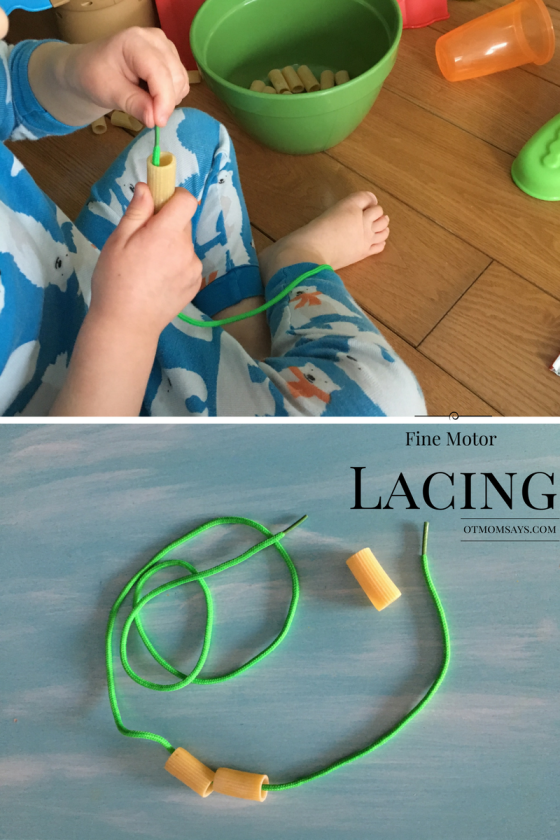
1. Lace/string them. This activity promotes a lot of great skills, including bilateral coordination and fine motor control. Prior to learning to write and before little hands can complete advanced fine motor skills, some prerequisite abilities are needed, such as strength, coordination, and the ability to utilize a variety of grasp patterns efficiently. This activity includes the need for more mature grasp patterns (such as the pincer grasp and three-jaw-chuck) and encourages wrist extension (also needed in for higher level fine motor skills, including writing) and challenges visual motor skills. You can make this activity even more educational by including patterns to the stringing or practicing counting while stringing.
img_6960

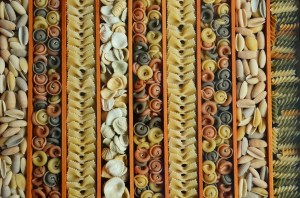
2. Sort them. You can do this a couple different ways: using visual and/or tactile discrimination. Learning to sort is a great activity for young kids. It teaches children to recognize similarities and differences. You can make this a fun game by having kids rely on only their tactile sense to discriminate different kinds of pastas (a sense known as stereognosis). To do this, occlude your child’s vision from the bowl of pasta and have them try to identify the different shapes without seeing them.
img_6958

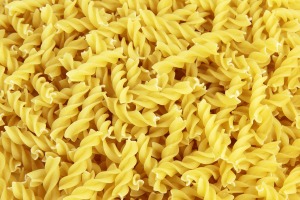
3. Use pasta in a sensory box! Sensory boxes are a great and quick activity go-to. You can use smaller pastas for activities that are similar to those you could do in a sand box or rice box. Adding different textures or sizes of noodles can be fun, or just one unified kind can be used as well. I really like giving my kids little cups and spoons so they can scoop, pour, and stir the noodles. If you really think about the ability to be able to accurately pour and scoop, there is a lot going on. You practice your proprioceptive sense to adjust the right muscle force as to not throw the pasta across the room. You use visual motor skills to be able pour directly into what you intend to. You get a lot of sensory feedback from the restriction of the noodles as you stir and move them and you can hear them rattle around as you are doing so. Kids just love it, and there’s a lot they gain from it.
img_6936

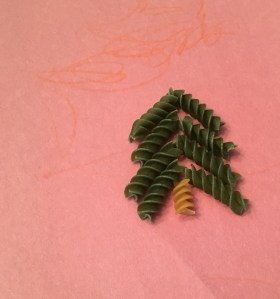
4. Glue them/use them as an art medium. My kids love art and sometimes it’s great to break away from the usual crayons and markers. I remember making macaroni pictures as a kid, and years later my own kids still embrace this classic activity. Not only is creativity engaged, but once agin fine motor manipulation of the small piece is needed and practiced. You can find tons of ideas online (try pinterest) or let your kids free style it. Above is the one we came up with this week.
easy

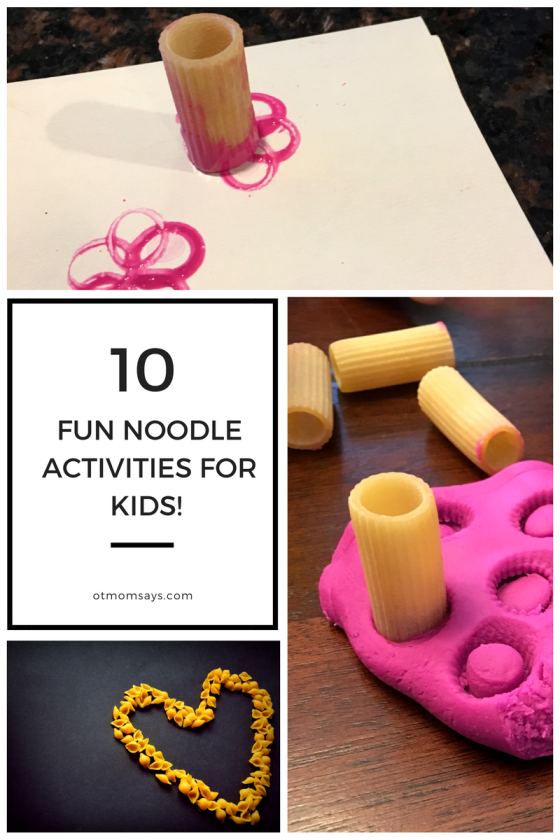
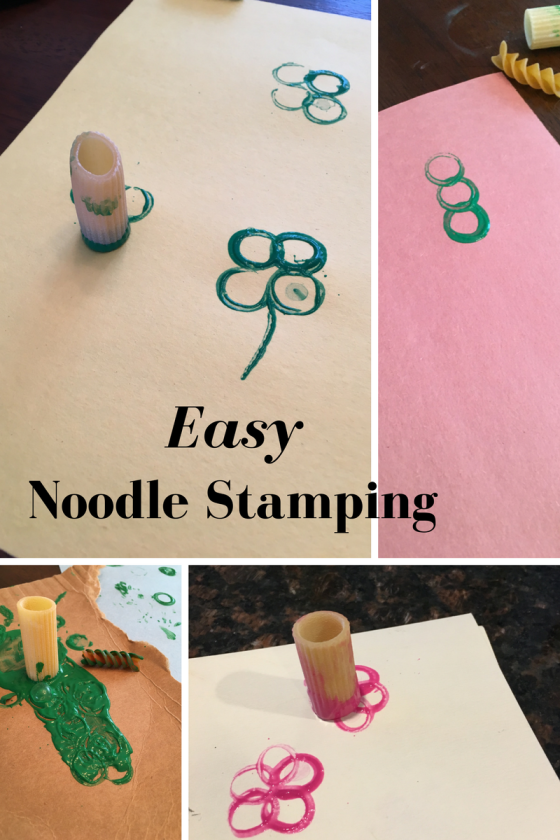
5. Use them as an art tool. Who needs a paint brush, when you have a noodle? Well, we had a bunch of rigatoni noodles hanging around and I thought that the circular shape would be fun to make four leaf clovers for some St. Patrick’s Day crafting. I thought they turned out looking like clovers, but my son called them “butterflies.” I think that works too! We also made caterpillars and flowers. The most fun part was that the paint made little paint bubbles most of the time we “stamped” with the noodles.

6. Learn with them. Why not use a multi sensory approach to learning with noodles? You can line them up to learn letters or build a person to learn body awareness and body concept. My son liked counting out the right amount of noodle pieces for two eyes and ten fingers. You can make and copy patterns to work towards early math skills. You can play a visual memory game in trying to recall what kind of pastas were on a tray after having your kids look at them for a minute then taking them away. The options are as endless as the noodle varieties.

7. Pretend with them. Pretend play is an important area of play and contributes to social emotional development for kids, and pasta is an easy tool to let their imaginations run wild. I have an old blender that I often pull out (NOT including the sharp parts) as well as some bowls, spoons, whisks, etc. to allow my kids to “cook” in the kitchen while I make dinner.
img_6939

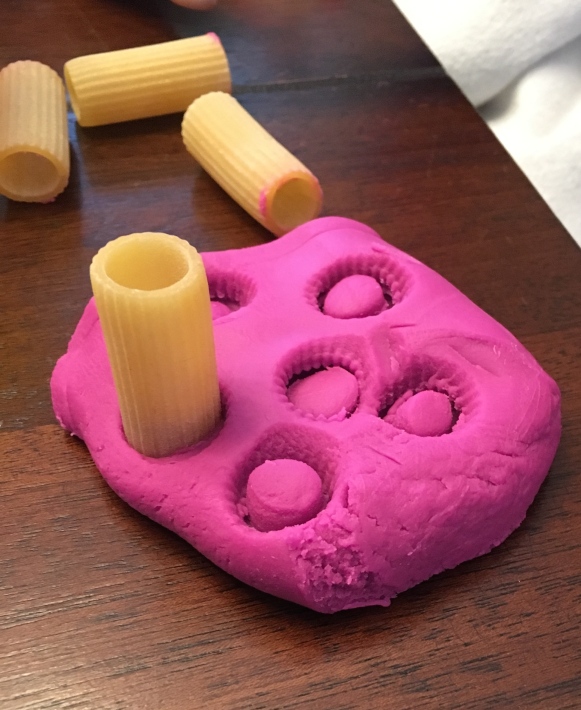
8. Stick them in play dough. This sounds simple enough, and it is. Pushing the noodles into play dough strengthens hand muscles that will be necessary for writing and other self care and fine motor tasks young kids need as they develop. You can also hide smaller noodles in the play dough for a sort of dig and find game.
img_6926

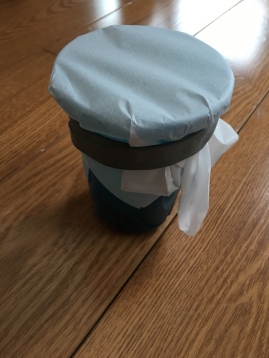
9. Shake them up! What kid doesn’t like to make noise? I think I remember doing something similar with beans as a child. Noodles work just as well. Find some kind of old cup or container (we used a couple plastic take and toss cups) and pour some noodles in. Cover the end with wax paper or parchment paper secured with a rubber band and shake away. This activity can get your kids up and moving and I think it’s just more fun to make your own toys sometimes. We used two different kinds of pasta shapes, and talked about the subtle difference in sounds each shaker had.

10. Free play. I was just about out of noodle ideas whey my kids came up with their own. My son decided to use them in place of the balls that came with an activity play set involving ramps. He found that the noodles slid down the ramps just fine, and he could jam enough of them in the toy to kind of line them up. This activity actually kept him entertained for nearly 45 minutes (Dr. Dad was impressed). My younger child usually prefers sticking them in cups and empty bottles but also joined her brother in the slide the noodle game. Either way, free play allowed them some unstructured kid time to just explore this item and see how it interacted with their environment. How fun is that?

img_6957

What might be the best thing about all of these ideas is that noodles are super cheap. So even if you don’t end up eating them, why not try something fun with a box dried pasta goodness? A lot of these activities you can use with other household goods, like rice, dried beans, cereal, etc. I like using pasta since it’s a little less messy than rice and my youngest seems less likely to eat it than things like beans that could be mistaken for candy, etc. If you have even more ideas, use your noodle and leave a comment! 🙂


*Disclaimer: The information presented in the blog is intended for information and entertainment purposes only. Please consult your physician with any medical concerns and/or for medical advice. The information presented is not intended to be used in place of individualized therapy services, please contact your health care team for skilled therapy if you think it is necessary. Please supervise your children (or friends, spouses, etc) if you decide to try any of the activities or ideas presented as the author or this blog does not claim liability for possible injury or negative consequences related to the activities and ideas presented here.

Embrace the Power of Proprioception

Dr. Dad says, “Stop taking apart the couch!”

OT Mom says, “Not just yet. Stack those those cushions, kids!”

You may be wondering, what the heck is proprioception? Proprioception is the sense of our joints position, the location of our body parts in space, and the awareness of the strength being used for a particular task. It allows us to know where our limbs are and how much force we are using at any given moment. The sense receptors for proprioception are within the muscles and joints of our bodies. This sensory system is super important and allows us to move and react to our environment and works in connection with our other senses. In particular, the tactile (aka touch) sensory system and proprioceptive system work closely to help use develop body awareness as children (Kramer & Hinojosa, 2010).

embrace-the-power

While most of us can self regulate our sensory needs to succeed throughout life, some of us need or could use a little more help. We are all on a continuum in the realm of sensory experience, and I believe that my kids happen to be more towards the sensory seeking end of the spectrum.

When my 3 year old gets out of bed, the first thing he does is STOMP down the hallway. He love to to crash, spin, jump, and dance. He screams just to scream and instead of just walking to his door of the car, he rubs against the car on his way. My daughter, who loves to spin and dance and push our kitchen chairs around the house seems to be following in his foot steps. It’s pretty normal for toddlers to be full of energy and active and it’s such a good opportunity to let them engage in sensory  activities. 

Your own kids (or yourself) may not be towards the sensory seeking end of the spectrum, but they are somewhere on the sensory continuum. Some of us seek out input, some of us avoid it, and most of use do a combination or do something in-between.  Sensory input is all around us, and the way we process the world impacts our functioning in many ways.

So adding proprioceptive activities to your daily routine can help regulate your alertness or arousal to an optimal state.

Proprioceptive input is powerful.

It can calm you down or amp you up a bit. An easy way to think of proprioceptive input is to think of “heavy work” activities. You want these sensory experiences to impact your muscles and joints. My son is awesome at figuring out ways to engage in heavy work through play, but he sometimes needs a little help with he’s getting off track or when we are not at home when his usual go-to’s are not available.

Learning from the best, we can look at the favorite self-sought activities from my awesome little three year old:

  •   Stacking the couch cushions– Although it’s probably not the best thing for our couch (and drives Dr. Dad crazy) it provides multiple sensory inputs. He gets the heavy work from lifting and stacking the cushions. He also loves to climb over them and squeeze himself under them providing deep pressure input. An added bonus is that I can see his imagination at work. He likes to build “volcanos” and “hotels.” This activity obviously benefits from close supervision to prevent fall, injury, etc, but with supervision, it’s been a big favorite in my house.
    • In addition to being buried under the couch cushions, my son loves to be buried by toys. Deep pressure following the hard work of moving the toys seems to comfort him. He will remove all of his toys from the toy box and ask to be buried. Again- use common sense and caution. I am looking forward to summer when he might like getting buried in the sand.

Since we are not always able to play in the living room by the couch and my kiddo still craves sensory input throughout the day, here are some additional ideas we’ve come up with to sneak in some input and/or add it to your daily routines.

everyday

  • While at the store– push a shopping cart and help lift the shopping items- this obviously engages the muscles, and most kids think it’s pretty fun. I love that some grocery stores have mini carts for kids, what a great idea, load it up!
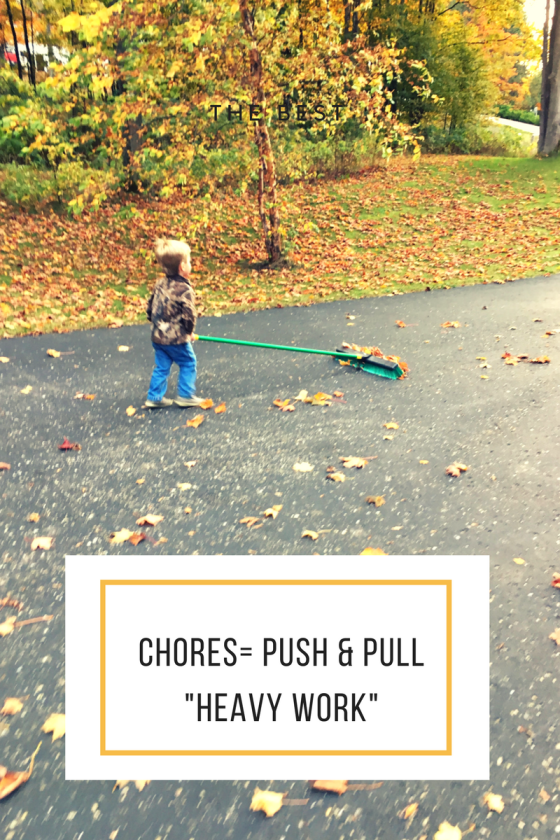
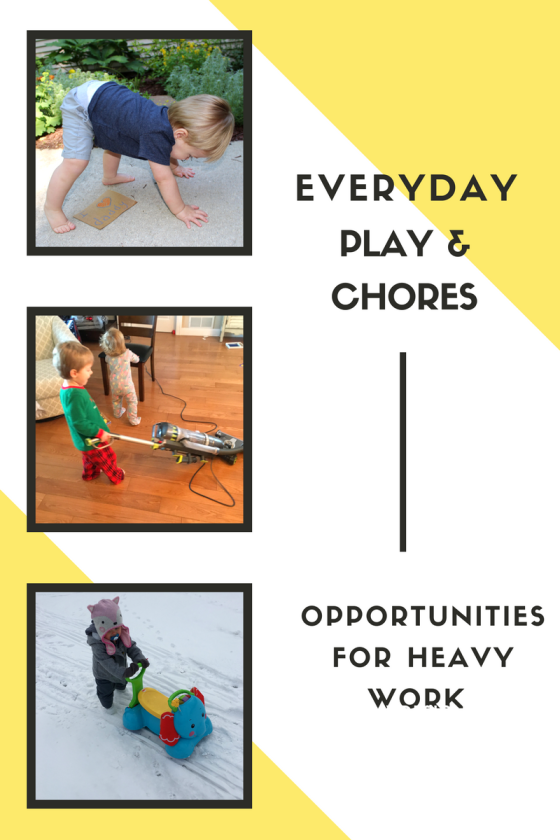
  • Have them help with chores– shovel, rake, sweep, vacuum, mop, and scrub. While little ones might not do the best job, they are sure good helpers. Even if the chores take a bit longer, I find it rewarding to allow my kids to help and it provides such great sensory experiences. In addition to proprioception, you’re using lots of other great senses too (visual, auditory, tactile, vestibular)! It also helps develop a sense of accomplishment and roles within the family unit which I think is great for a child’s self-esteem.1
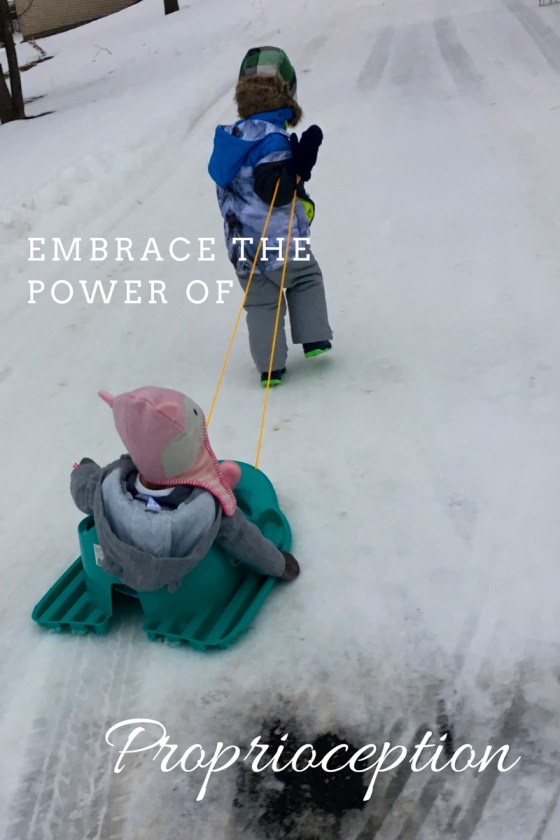
  • Push and pull– my son is a great helper and loves pulling his little sister in a wagon or sled, or pushing her in a stroller. Proprioceptive input that is in a consistent direction tends to be more calming, while push and pull actives (like tug-a-war, mopping, vacuuming) tend to be more alerting. Keep that in mind if you are considering a game of tug-a-war before bed… it might be best as a first thing in the morning activity.
  • In a pinch- Adding proprioception throughout your daily routing takes just a few minutes.  If you don’t have time for a big session, there are little things that can provide some great sensory input. Things like jumping jacks, dancing, yoga poses, animal walks (walk like a “bear,” “crab,” etc), clapping and marching/stomping games can be effective, quick, and easy to incorporate throughout the day.
  • Don’t forget the small joints, they count too! Hard work for little hands can give some good input too. Some ideas for play time include actives like play dough, legos type snapping blocks, and popping bubble wrap. While helping out around the house, kids can help with kneading pizza or bread dough, squeezing a spray bottle, or maintaining control of a hand held electric mixer when baking.

Finally, please remember, proprioception is not just for kids. Perhaps my kids are on the sensory seeking end of the proprioceptive spectrum because I am as well. People who know me, know I have trouble sitting still, and Dr. Dad can attest to my sometimes strange dance moves/hops that can seem to come out of nowhere while just walking through my house (though I tend to restrain myself in public). Part of my sensory routine is going for runs whenever I get the chance or at least doing some light to moderate physical activity on a daily or near daily basis. While my husband isn’t quite the sensory seeker I am when it comes to proprioception, he does feel great and balanced after lifting weights. What do you do to regulate yourself? 

References:

Kramer, P. & Hinojosa, J. (2010). Pediatric Occupational Therapy (3rd ed). Lippincott Williams & Wilkins, Philadelphia, PA

*Disclaimer: The information presented in the blog is intended for information and entertainment purposes only. Please consult your physician with any medical concerns and/or for medical advice. The information presented is not intended to be used in place of individualized therapy services, please contact your health care team for skilled therapy if you think it is necessary. Please supervise your children (or friends, spouses, etc)  if you decide to try any of the activities or ideas presented as the author or this blog does not claim liability for possible injury or negative consequences related to the activities and ideas presented here.
Occupational Therapy is for Everyone

I say this because as I move through life and watch my kids grow, I realize how often I use the tools I’ve learned through my studies in occupational therapy (OT) and how lucky I feel to have these tools to utilize to begin with. Some readers may be wondering, what is occupational therapy anyway? Well, let me give you a brief overview as I start this blog.

Occupational therapy focuses on our everyday activities with the word “occupation” meaning not just a job, but every meaningful activity we need or want to do on any given day. Occupational therapists help individuals increase independence and promote success in all aspects of daily life, from the basics of self-care to succeeding in the work place and everything in-between.

ot-mom-says

The American Occupational Therapy Association (AOTA) has identified eight categories of our major life occupations:

Activities of daily living (ADLs) such as basic self care (Bathing, dressing, eating, etc)

Instrumental activities of daily living (IADLs) which include more advanced self care-type activities (Meal preparation, home maintenance, caregiving, etc.)

Rest and sleep, including sleep preparatory activities

Education– both formal and informal.

Work– paid and non paid

Play– one of my favorites and the major occupation for kids (which I plan to touch on A LOT in blog posts to come)

Leisure– non-oligagory fun stuff

Social participation– including in the community, with family, and peers/friends

You can find Occupational Therapists in a variety of settings, such as hospitals, schools, outpatient clinics, and rehab centers to name just a few.  OTs directly address a multitude of health conditions across all age ranges as well as contribute to wellness based programs and preventative care. AOTA has a TON of wonderful information about OT and the many realms of practice that OTs do, so for more information, please check out their website here.

So now that you have the very basics of what OT is, why do I say that Occupational Therapy is for everyone?   Well, OT can help you “recognize the importance of habits and routines that promote the adoption and maintenance of healthy behaviors” (AOTA, 2015).  We all have goals and aspirations and want to live happy, healthy, fulfilled lives whether we are struggling with an illness or injury or not. Personally, I’ve found myself utilizing a lot the knowledge I have gained professionally as an OT to work towards my own overall wellness for myself and my family. For example, I have two  young children, ages one and three, and I frequently pull out sensory strategies to help our day go just a bit smoother.  I’m not saying everyone needs their own skilled therapist, but that many of the philosophies and information that is based in OT may be beneficial to a wide range of people.

For another example, my biggest New Year’s resolution this year was to get more sleep. Many of us are familiar with the cognitive lag we feel when we are sleep deprived and over the past year I have been struggling to feel clear headed and well rested. Even more concerning is the impacts on your health  in which sleep deprivation can contribute.  According to the CDC, insufficient sleep is linked to such things as an increased risk for type 2 diabetes, cardiovascular disease, obesity, and depression.

Recognizing that this was an area of concern for myself was the first step to improving this area of my life.  While I don’t always have control over this (it seems that some nights my kids love to take turns waking me up), I have been able to make some adjustments in this area.

So from an OT perspective, a good place to start in efforts to improve your overall health and wellness is to really look at your routine. By analyzing what you do on  a daily basis you may find out what is and what is not working for you or promoting the best success and outcomes. As a quick exercise, you can start by asking yourself a few of questions:

Do you get enough sleep?

Do you feel well rested?

Do you have a balance between work and obligations, rest, and leisure?

Do you feel well connected to others in a positive way?

If you answered “no” to any of the above questions, you may want to explore that area a little further. To use my own example of insufficient sleep, once I really realized I needed to make a change,  I was able to work out a couple strategies that seem to be helping:

I often go to bed (a bit) earlier now. This was a hard adjustment to make, because once my kids are finally tucked in, it’s so nice having some time to myself and with my husband. However, I’ve found that just an extra 30 minutes of sleep has made me feel a little more rested in the morning.

I fall back to sleep easier. My kids wake me up at night sometimes and it’s just one of those things out of my control.  Now, to fall back asleep I try to have a moment of mindfulness and be aware of how comfortable my bed is. I listen to my breath and think about the softness of the pillow. I’m not saying this will work for everyone, but it sure does work for me. The American Sleep Association has more tips for good sleep hygiene, check them out.

I occasionally nap. I’m terrible at napping, but sometimes I try. I let the dishes sit in the sink and if it’s one of the wonderful occasions when both of my children are napping, I get back into bed. People who know me personally know this is not something I often do, as I have a hard time slowing down and relaxing. However, since I’ve made it a goal to get more rest, if I’m feeling tired and have the opportunity, I sometimes attempt a quick nap.

I could go on all day expanding upon this topic, but I think I will end it here and save more thoughts for another day. As my first blog post, I wanted to give just a general overview of OT and why I’m writing. I’m planning to share some more of what I have learned (and am still learning) in my blog posts to come and while not all posts will be bursting with OT philosophy, most will have at least just a touch of OTism, simply because being an OT is part of who I am. Enjoy!

References:

American Occupational Therapy Association (2014). Occupational therapy practice framework: domain and precess (3rd edition), American Journal of Occupational Therapy 2014; 68 [supplement 1], 19-20.  doi: 10.5014/ajot.2014.682006

American Occupational Therapy Association (2015). The role of occupational therapy with health promotion [Fact sheet]. Bethesta, MD: Author. Retrieved from http://www.aota.org/~/media/Corporate/Files/AboutOT/Professionals/WhatIsOT/HW/Facts/FactSheet_HealthPromotion.pdf

Sleep Hygiene Tips. (n.d.) Retrieved February 10, 2017 from https://www.sleepassociation.org/patients-general-public/insomnia/sleep-hygiene-tips/

Centers for Disease Control and Prevention (2013, July 1). Sleep and chronic disease. Retrieved February 10, 2017 from https://www.cdc.gov/sleep/about_sleep/chronic_disease.html

*Disclaimer: The information presented in the blog is intended for information and entertainment purposes only. Please consult your physician with any medical concerns and/or for medical advice. The information presented is not intended to be used in place of individualized therapy services, please contact your health care team for skilled therapy if you think it is necessary. Please supervise your children (or friends, spouses, etc)  if you decide to try any of the activities or ideas presented as the author or this blog does not claim liability for possible injury or negative consequences related to the activities and ideas presented here.